The Infinite Circle of Healing
Expanding access to compassionate psychedelic care, facilitator equity, and clinical research support.
The Infinite Circle of Healing is a non-profit organization dedicated to reducing existential suffering and fear at life’s most vulnerable moments.
•
Licensed facilitators who donate time or reduce fees to serve individuals with existential anxiety
•
Scholarships for veterans and BIPOC individuals pursuing licensure as psilocybin or natural medicine therapy facilitators
•
Financial assistance for facilitators donating services to FDA-approved clinical trial participants
At the center of our circle is dignity, meaning, and compassionate care.

•
Apply for Support
•
Partner as a Facilitator
•
Donate to the Circle
The Infinite Circle of Healing does not provide medical care directly.
All supported services are delivered by licensed professionals in accordance
with applicable laws, regulations, and ethical guidelines.


We provide financial assistance that allows ethical psilocybin and natural medicine therapy to reach those who might otherwise be
excluded — including individuals facing terminal cancer diagnoses, end-of-life anxiety, and fear of cancer recurrence.
Benefits of Psilocybin Therapy
Benefits of Psilocybin to Treat Cancer Patients
Psilocybin-assisted therapy has shown remarkable promise in easing the profound anxiety, depression, and existential distress that often accompany a terminal cancer diagnosis. Unlike conventional treatments that may only blunt symptoms, psilocybin can facilitate deeply meaningful experiences that shift perspective, reduce fear of death, and foster a sense of peace and acceptance. Research from leading medical institutions has found that even a single guided session can lead to lasting reductions in anxiety and improvements in mood, often accompanied by increased spiritual well-being and emotional clarity. For individuals facing the uncertainty and emotional weight of a terminal illness, psilocybin’s capacity to promote feelings of connection, gratitude, and transcendence can be life-affirming, helping them approach their remaining time with greater emotional resilience and dignity. When administered in a safe, supportive clinical environment, psilocybin offers a compassionate, transformative approach to end-of-life mental health care.Benefits of Psilocybin to Treat PTSD in Veterans
Emerging research suggests that psilocybin, the psychoactive compound found in certain mushrooms, may hold significant promise in treating post-traumatic stress disorder (PTSD) among veterans. Unlike traditional medications that often focus on symptom suppression, psilocybin-assisted therapy appears to facilitate deep emotional processing and reconnection, allowing individuals to address the root causes of trauma. Clinical studies indicate that psilocybin can promote neuroplasticity, enhance emotional resilience, and reduce avoidance behaviors commonly seen in PTSD. For veterans, who often face treatment-resistant symptoms and high rates of depression or anxiety, psilocybin therapy—when delivered in a controlled, therapeutic setting—may help reduce intrusive memories, alleviate hypervigilance, and improve overall quality of life. While further research is necessary to fully understand its long-term safety and effectiveness, early findings are offering hope for a transformative new approach to mental health care for those who have served.Benefits of Psilocybin to Treat BIPOC Individuals
Psilocybin-assisted therapy shows growing potential as a tool for healing generational trauma and addressing mental health challenges disproportionately affecting BIPOC communities. Intergenerational trauma—rooted in histories of colonization, slavery, displacement, and systemic racism—can manifest as chronic anxiety, depression, and mistrust, often compounded by barriers to culturally competent care. Psilocybin’s ability to promote neuroplasticity, deepen emotional insight, and foster a sense of interconnectedness may help individuals process inherited pain, break cycles of harmful coping patterns, and reclaim a sense of agency. In supportive, culturally informed therapeutic settings, psilocybin experiences can offer profound moments of clarity and emotional release, helping to dismantle internalized narratives of oppression. Early research and community-led initiatives suggest that, when paired with equitable access and respect for cultural context, psilocybin therapy could be a powerful ally in restoring mental well- being and strengthening resilience within BIPOC communities.Mystical Experiences in Psilocybin Journey’s
Across multiple clinical studies of psilocybin-assisted therapy for cancer-related existential anxiety, patients who report mystical-type experiences—characterized by a sense of unity, transcendence of time and space, deep emotional insight, and enduring meaning—consistently demonstrate significantly better and more durable therapeutic outcomes than those who do not. The intensity of these experiences has been strongly correlated with large and sustained reductions in anxiety, depression, and fear of death, as well as improvements in quality of life, spiritual well-being, and acceptance of mortality lasting six months or longer after a single or limited number of sessions. Rather than reflecting transient drug effects, these mystical experiences appear to function as psychologically transformative events, helping patients reframe illness, reduce existential distress, and cultivate a sense of peace, connectedness, and meaning that buffers against end-of-life anxiety. Importantly, the benefits arise not from pharmacology alone but from the combination of psilocybin, therapeutic support, and the personally meaningful insights gained during these profound subjective experiences.Studies of Psilocybin Therapy for Treatment of Mental Health Issues
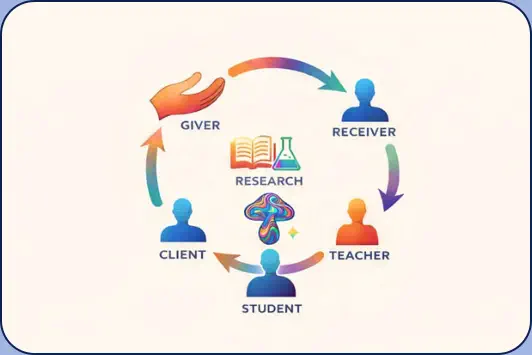
• Griffiths RR, et al. J Psychopharmacol (2016). Psilocybin for depression/anxiety in life-threatening cancer (randomized double-blind). • Raison CL, et al. JAMA (2023). Single-dose psilocybin for MDD (RCT vs niacin). • Carhart-Harris R, et al. N Engl J Med (2021). Psilocybin vs escitalopram for depression. • Goodwin GM, et al. N Engl J Med (2022). Single-dose COMP360 psilocybin for TRD (dose-ranging). • Bogenschutz MP, et al. JAMA Psychiatry (2022). Psilocybin-assisted psychotherapy for alcohol use disorder (double-blind RCT vs diphenhydramine). • Johnson MW, et al. J Psychopharmacol (2014). Psilocybin-facilitated smoking cessation (open-label pilot). • Johnson MW, et al. (2017). Long-term follow-up of psilocybin-facilitated smoking cessation. • McGowan NM, et al. J Psychopharmacol (2025) + published study summary with CAPS-5 numbers (COMP360 PTSD open-label). • Moreno FA, et al. (2006). Psilocybin in OCD (9-patient study; Y-BOCS reductions 23–100%). • Peck SK, et al. Nature Medicine (2023). Psilocybin therapy for females with anorexia nervosa (pilot safety/tolerability/acceptability). Our work recognizes a simple truth: Healing is not linear. It is relational. It moves in circles — from giver to receiver, from teacher to student, from research to practice, and back again.
Why Support Psychedelic Research and Treatments ?
Supporting psychedelic research and treatments matters because they address forms of human suffering that conventional approaches often fail to reach. Rigorous clinical studies show that psychedelic-assisted therapies—when delivered ethically and within regulated frameworks—can produce rapid, durable reductions in depression, anxiety, PTSD, and existential distress, particularly for individuals facing serious illness or end-of-life concerns. Beyond symptom relief, these treatments frequently restore meaning, connection, and psychological flexibility, improving quality of life for patients and reducing long-term healthcare burdens. Continued research ensures safety, equity, and evidence-based standards, while responsible treatment access allows these powerful tools to be used with compassion, integrity, and accountability for those who need them most.



The Infinite Circle of
Healing
Expanding access to compassionate
psychedelic care, facilitator equity, and
clinical research support.
The Infinite Circle of Healing is a non-profit organization dedicated to reducing existential suffering and fear at life’s most vulnerable moments.
•
Licensed facilitators who donate time or
reduce fees to serve individuals with existential
anxiety
•
Scholarships for veterans and BIPOC
individuals pursuing licensure as psilocybin or
natural medicine therapy facilitators
•
Financial assistance for facilitators donating
services to FDA-approved clinical trial
participants
•
Apply for Support
•
Partner as a Facilitator
•
Donate to the Circle

The Infinite Circle of Healing does not provide
medical care directly. All supported services are
delivered by licensed professionals in accordance
with applicable laws, regulations, and ethical
guidelines.

We provide financial assistance that allows ethical
psilocybin and natural medicine therapy to reach
those who might otherwise be excluded —
including individuals facing terminal cancer
diagnoses, end-of-life anxiety, and fear of cancer
recurrence.
Benefits of Psilocybin Therapy
Benefits of Psilocybin to Treat Cancer Patients
Psilocybin-assisted therapy has shown remarkable promise in easing the profound anxiety, depression, and existential distress that often accompany a terminal cancer diagnosis. Unlike conventional treatments that may only blunt symptoms, psilocybin can facilitate deeply meaningful experiences that shift perspective, reduce fear of death, and foster a sense of peace and acceptance. Research from leading medical institutions has found that even a single guided session can lead to lasting reductions in anxiety and improvements in mood, often accompanied by increased spiritual well-being and emotional clarity. For individuals facing the uncertainty and emotional weight of a terminal illness, psilocybin’s capacity to promote feelings of connection, gratitude, and transcendence can be life-affirming, helping them approach their remaining time with greater emotional resilience and dignity. When administered in a safe, supportive clinical environment, psilocybin offers a compassionate, transformative approach to end- of-life mental health care.Benefits of Psilocybin to Treat PTSD in Veterans
Emerging research suggests that psilocybin, the psychoactive compound found in certain mushrooms, may hold significant promise in treating post-traumatic stress disorder (PTSD) among veterans. Unlike traditional medications that often focus on symptom suppression, psilocybin-assisted therapy appears to facilitate deep emotional processing and reconnection, allowing individuals to address the root causes of trauma. Clinical studies indicate that psilocybin can promote neuroplasticity, enhance emotional resilience, and reduce avoidance behaviors commonly seen in PTSD. For veterans, who often face treatment-resistant symptoms and high rates of depression or anxiety, psilocybin therapy—when delivered in a controlled, therapeutic setting—may help reduce intrusive memories, alleviate hypervigilance, and improve overall quality of life. While further research is necessary to fully understand its long- term safety and effectiveness, early findings are offering hope for a transformative new approach to mental health care for those who have served.Benefits of Psilocybin to Treat BIPOC Individuals
Psilocybin-assisted therapy shows growing potential as a tool for healing generational trauma and addressing mental health challenges disproportionately affecting BIPOC communities. Intergenerational trauma—rooted in histories of colonization, slavery, displacement, and systemic racism—can manifest as chronic anxiety, depression, and mistrust, often compounded by barriers to culturally competent care. Psilocybin’s ability to promote neuroplasticity, deepen emotional insight, and foster a sense of interconnectedness may help individuals process inherited pain, break cycles of harmful coping patterns, and reclaim a sense of agency. In supportive, culturally informed therapeutic settings, psilocybin experiences can offer profound moments of clarity and emotional release, helping to dismantle internalized narratives of oppression. Early research and community-led initiatives suggest that, when paired with equitable access and respect for cultural context, psilocybin therapy could be a powerful ally in restoring mental well-being and strengthening resilience within BIPOC communities.Mystical Experiences in Psilocybin Journey’s
Across multiple clinical studies of psilocybin- assisted therapy for cancer-related existential anxiety, patients who report mystical-type experiences—characterized by a sense of unity, transcendence of time and space, deep emotional insight, and enduring meaning—consistently demonstrate significantly better and more durable therapeutic outcomes than those who do not. The intensity of these experiences has been strongly correlated with large and sustained reductions in anxiety, depression, and fear of death, as well as improvements in quality of life, spiritual well-being, and acceptance of mortality lasting six months or longer after a single or limited number of sessions. Rather than reflecting transient drug effects, these mystical experiences appear to function as psychologically transformative events, helping patients reframe illness, reduce existential distress, and cultivate a sense of peace, connectedness, and meaning that buffers against end-of-life anxiety. Importantly, the benefits arise not from pharmacology alone but from the combination of psilocybin, therapeutic support, and the personally meaningful insights gained during these profound subjective experiences.Studies of Psilocybin Therapy for Treatment of
Mental Health Issues
• Griffiths RR, et al. J Psychopharmacol (2016). Psilocybin for depression/anxiety in life- threatening cancer (randomized double-blind). • Raison CL, et al. JAMA (2023). Single-dose psilocybin for MDD (RCT vs niacin). • Carhart-Harris R, et al. N Engl J Med (2021). Psilocybin vs escitalopram for depression. • Goodwin GM, et al. N Engl J Med (2022). Single-dose COMP360 psilocybin for TRD (dose-ranging). • Bogenschutz MP, et al. JAMA Psychiatry (2022). Psilocybin-assisted psychotherapy for alcohol use disorder (double-blind RCT vs diphenhydramine). • Johnson MW, et al. J Psychopharmacol (2014). Psilocybin-facilitated smoking cessation (open-label pilot). • Johnson MW, et al. (2017). Long-term follow- up of psilocybin-facilitated smoking cessation. • McGowan NM, et al. J Psychopharmacol (2025) + published study summary with CAPS- 5 numbers (COMP360 PTSD open-label). • Moreno FA, et al. (2006). Psilocybin in OCD (9- patient study; Y-BOCS reductions 23–100%). • Peck SK, et al. Nature Medicine (2023). Psilocybin therapy for females with anorexia nervosa (pilot safety/tolerability/acceptability). Our work recognizes a simple truth: Healing is not linear. It is relational. It moves in circles — from giver to receiver, from teacher to student, from research to practice, and back again.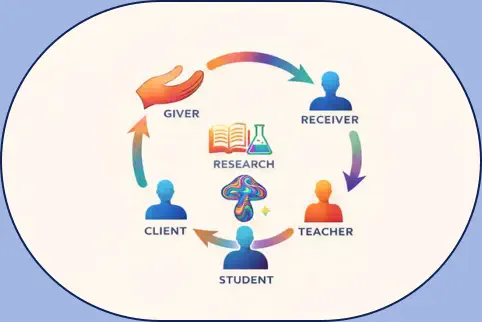
At the center of our circle is dignity,
meaning, and compassionate care.
Why Support Psychedelic Research and
Treatments ?
Supporting psychedelic research and treatments matters because they address forms of human suffering that conventional approaches often fail to reach. Rigorous clinical studies show that psychedelic-assisted therapies—when delivered ethically and within regulated frameworks—can produce rapid, durable reductions in depression, anxiety, PTSD, and existential distress, particularly for individuals facing serious illness or end-of-life concerns. Beyond symptom relief, these treatments frequently restore meaning, connection, and psychological flexibility, improving quality of life for patients and reducing long-term healthcare burdens. Continued research ensures safety, equity, and evidence-based standards, while responsible treatment access allows these powerful tools to be used with compassion, integrity, and accountability for those who need them most.